Guide · about three minutes
Has anyone ever tested fire in air like this?
Before astronauts live in a new kind of cabin air, someone has to ask that question. MARGIN answers it from NASA’s own test records: describe a cabin, and it finds the most similar tests NASA has run in space, tells you how far away they are, and links every number to where it came from.
01
The problem, in plain words
 AI-generated illustration
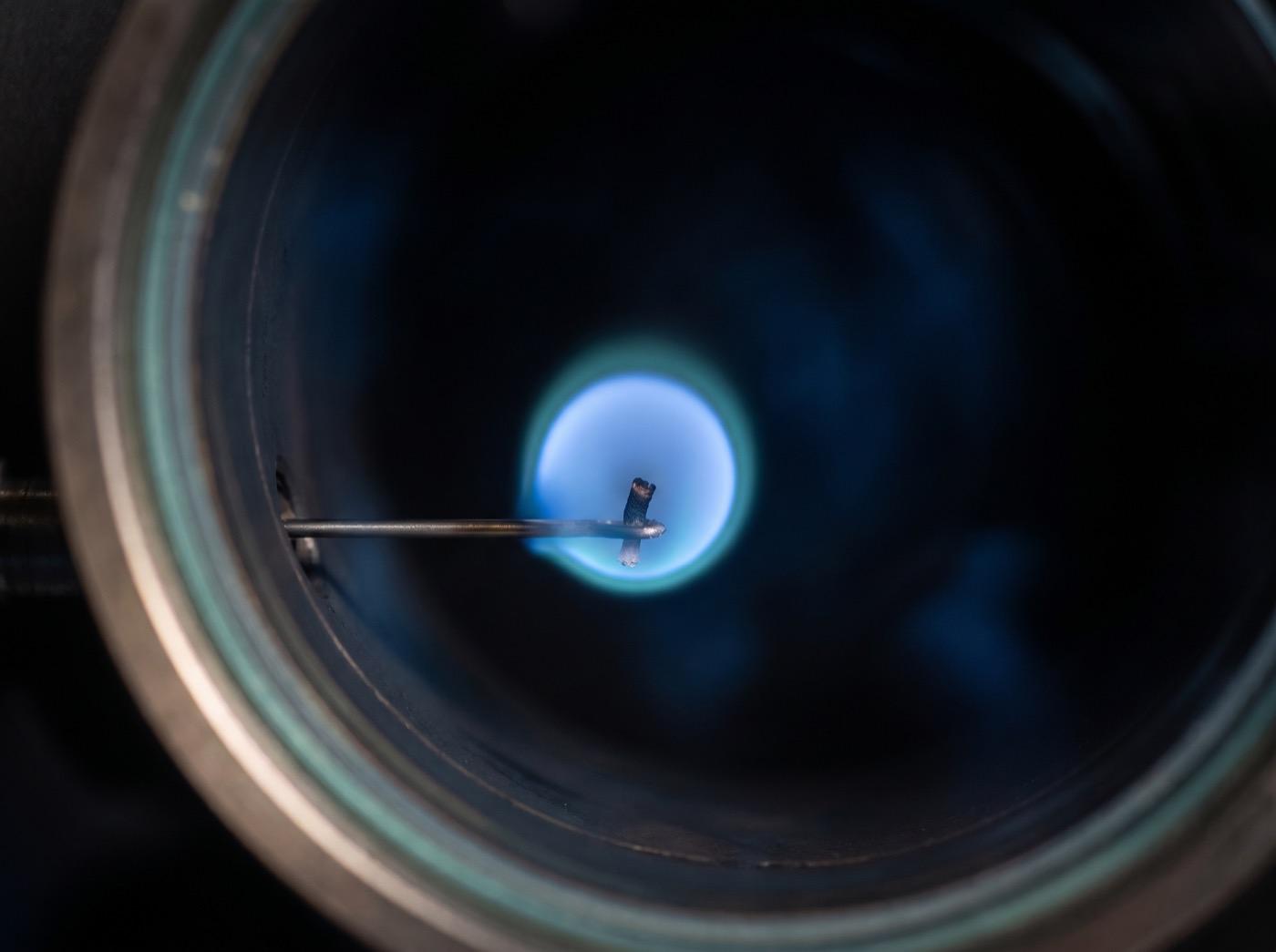
Fire behaves differently in space
Without gravity, hot gas does not rise, so a flame cannot pull in fresh air the way it does on Earth. It becomes a dim blue ball, and whether it keeps burning depends on the oxygen level, the pressure and how fast the cabin air is moving.
 AI-generated illustration
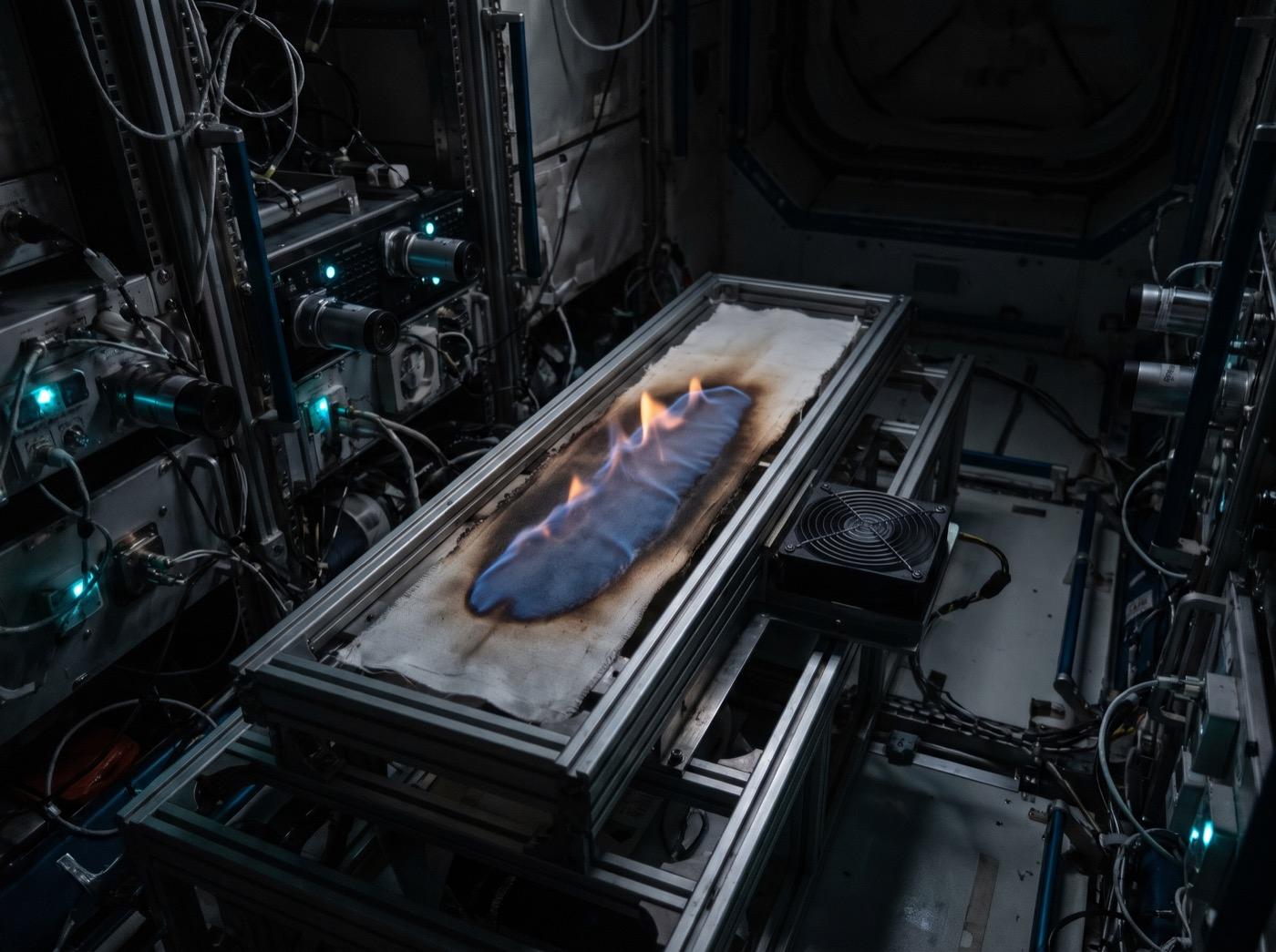
So NASA tests it in orbit
For decades NASA has burned fuels and materials in space and logged the exact conditions. Its Physical Sciences Informatics (PSI) archive holds 1,870 of these test runs from 24 investigations.
 AI-generated illustration
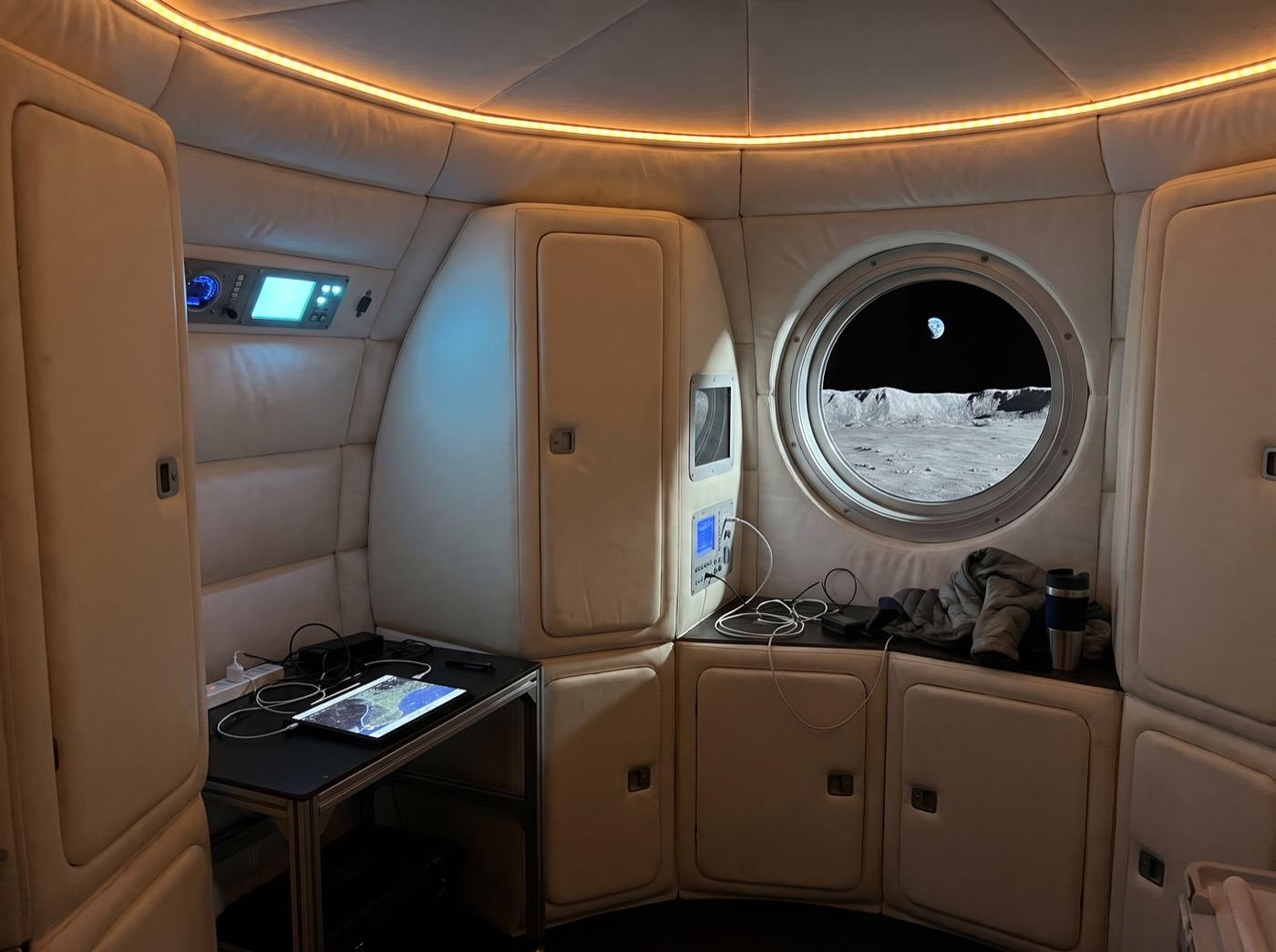
But future cabins will breathe different air
To make spacewalks quicker, Artemis habitats plan 26.5% oxygen at lower pressure, and the Exploration Atmosphere 34%. The highest oxygen in any of PSI’s 140 solid-material tests is 22.2%. 0 of them reach the planned levels. That is the coverage gap.
02
What MARGIN does
MARGIN is a search engine for evidence. It does not simulate fire. It looks up what NASA has actually tested and measures how close that comes to the cabin you describe.
- 1
Describe a cabin
Oxygen (% by volume), total pressure, how fast the air moves, the gravity level (microgravity, Moon, Mars or Earth) and the fire question: does a material burn, does a fire alarm see the smoke, does a fuel droplet keep burning, and so on.
- 2
Keep only tests that count
Only tests in the same gravity level that answer the same kind of question are compared. A burning droplet says nothing about whether a fabric ignites.
- 3
Measure the distance, D
One step is 2 percentage points of oxygen, or 25% more or less pressure, or 5 cm/s of airflow. Steps on the three axes combine like distance on a map: D = √(oxygen steps² + pressure steps² + airflow steps²).
- 4
Give a verdict, with the receipts
The nearest comparable test sets the verdict. Every test links back to its row in the NASA table or the page of the NASA paper, with a short quote.
- DIRECT
- D ≤ 1: NASA has tested conditions within about one step of yours.
- NEAR
- D ≤ 2.5: the closest tests are a few steps away.
- DISTANT
- D > 2.5: the nearest test is far from your scenario.
- NONE
- No comparable test at all at that gravity level.
Evidence proximity, not a safety rating. DISTANT does not mean dangerous and DIRECT does not mean safe. They say how much NASA test evidence sits near your scenario, nothing more.
03
A worked example
The Exploration Atmosphere, planned for pressurised rovers and lunar bases: 34% oxygen at 56.5 kPa (8.2 psia), with air moving at 10 cm/s. Each line is computed live by the same engine the Atlas uses; open any of them to see it.
- 1D 6.28Open “PSI tests only” in the Atlas →
PSI tests only
DISTANT The nearest PSI test is far away: no PSI solid-material test went above 22.2% oxygen.
- 2D 2.51Open “Add results from NASA papers” in the Atlas →
Add results from NASA papers
DISTANT The nearest evidence is now a Saffire IV–VI result, just past the 2.5 line, so a small change in an assumption could change the class.
- 3D 1.51Open “Assume faster airflow (20 cm/s)” in the Atlas →
Assume faster airflow (20 cm/s)
NEAR A different scenario, not a correction: MARGIN shows how much the answer depends on the airflow you assume, and does not pick one for you.
- 4Open “Move to the Moon” in the Atlas →
Move to the Moon
NONE PSI holds no combustion tests at lunar gravity, so there is nothing to compare. MARGIN never borrows evidence from another gravity level.
04
Reading the Atlas
The Atlas is the main screen. This is the worked example with NASA papers included. The numbers match the list below.
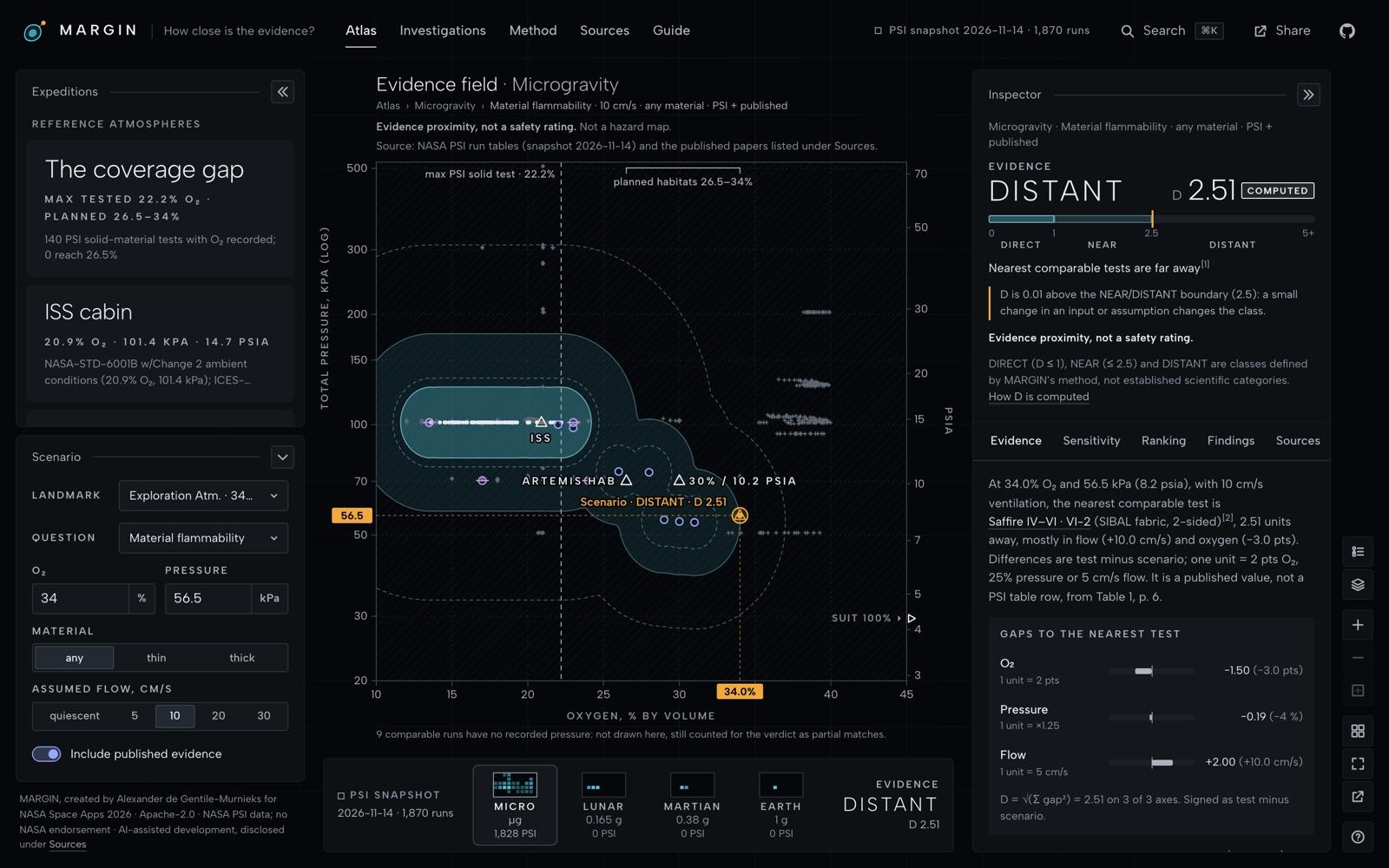
Expeditions
Ready-made starting points: the coverage gap, five real or planned cabin atmospheres and six findings from NASA papers. One click sets up the whole view.
Scenario
Your cabin: pick a reference atmosphere or type oxygen and pressure, choose the fire question, the material and the assumed airflow, and whether to include published NASA results.
NASA tests
Every dot is one test run from the PSI archive, placed by its oxygen (across) and total pressure (up). Rings are results from NASA papers; triangles are cabin atmospheres.
Coverage bands
The bright band is everywhere within D 1 of a comparable test (DIRECT); the faint band within D 2.5 (NEAR). Outside them, the evidence is DISTANT.
Your scenario
The amber marker. Drag it, click anywhere on the field, or use the arrow keys; everything updates instantly.
Verdict
How close the nearest comparable NASA test is: the class word, the distance D, and below it the gaps on each axis and the source of the nearest test.
Gravity regimes
Microgravity, Moon, Mars and Earth are kept completely separate. Switching shows that regime's own evidence, which is often none.
Tools
Key, layers, zoom, the four-regime overview, fullscreen and share. Every view is a link you can send.
The quickest way in: take the tour. It walks through these parts on the live Atlas in under a minute.
Start the tour05
The 30-second demo
A screen recording of the live site, with captions: the coverage gap, the Exploration Atmosphere, published evidence, the airflow assumption and the Moon.
06
The rest of the app
What MARGIN will not tell you
- Whether a cabin is safe. It measures how close the evidence is, not how dangerous anything is.
- What a fire would do. It never predicts or simulates flames.
- Anything in between gravity levels. Moon, Mars and microgravity results are never mixed or interpolated.
- Numbers without a source. Anything not traced to a NASA table row or paper page is not shown.
07
Words you will see
- PSI
- NASA’s Physical Sciences Informatics archive: the public record of experiments flown in space, including the combustion test tables MARGIN reads.
- O₂ %
- Oxygen as a share of the cabin air by volume. Earth’s air is 20.9%.
- kPa, psia
- Total cabin pressure. Sea level is 101.3 kPa (14.7 psia); lower-pressure cabins add oxygen to stay breathable.
- Flow, cm/s
- How fast the air moves past a burning sample. In microgravity it matters a lot, because nothing else brings in fresh oxygen. “Quiescent” means still air.
- Microgravity, µg
- The near-weightlessness of orbit. Moon: 0.165 g. Mars: 0.38 g. Earth: 1 g.
- D
- The evidence distance: how many steps separate a NASA test’s conditions from yours.
- Partial match
- A test that did not record one of the three conditions (often airflow). It is compared on the others and labelled.
- Published evidence
- Results from NASA papers that are not in the PSI tables, such as the Saffire experiments. Off by default; switch them on in the Scenario panel.
- Reported limit
- A threshold a paper reports (for example the lowest oxygen at which a material burned), not a tested condition.
Ready?
The four illustrations on this page are AI-generated and labelled as such. Every chart, number and screenshot comes from the app and its NASA data.